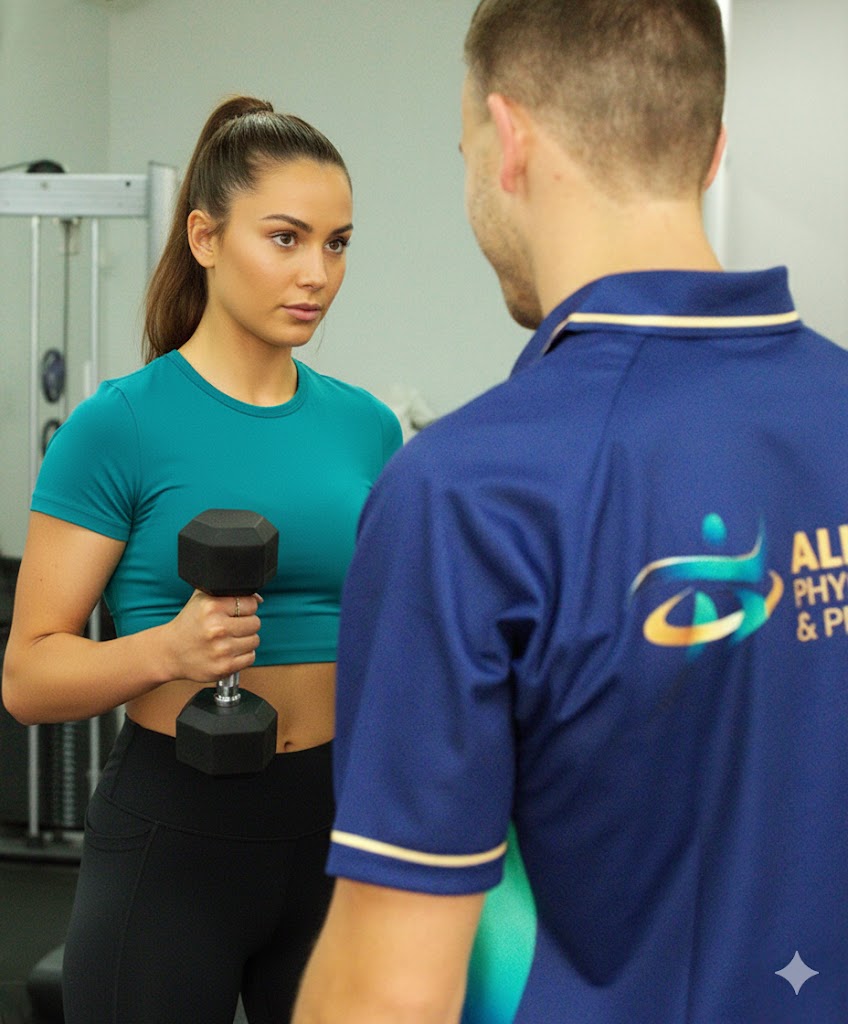
Knee Pain Relief & Treatment
At All Elite Physiotherapy & Performance, our physiotherapists use evidence-based treatments to relieve pain, restore function, and prevent future injury.
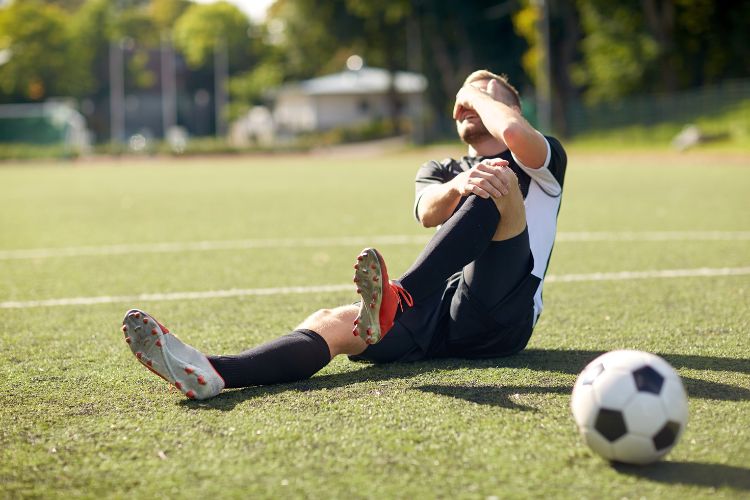
Knee pain refers to discomfort that affects the muscles, ligaments, tendons, cartilage, or bones surrounding the joint. It may feel sharp, dull, or throbbing and can range from mild stiffness to severe pain that limits movement.
While athletes often experience knee pain due to sudden injury, many cases develop gradually from repetitive movement, poor biomechanics, or muscular weakness. Identifying the exact cause early helps prevent long-term complications such as instability or early arthritis
Common Causes
Knee pain can be caused by a variety of factors, from sudden trauma to gradual wear and tear. Our physiotherapists assess not only where the pain is felt but also how your body moves, since imbalances in the hips, ankles, or core often contribute to knee stress.
Some of the most common causes include:
- Ligament injuries such as ACL, MCL, or LCL sprains
- Meniscus tears caused by twisting or sudden direction changes
- Patellar tracking problems that cause the kneecap to move incorrectly
- Muscle imbalances between the quadriceps and hamstrings
- Overuse injuries from repetitive running, jumping, or cycling
- Arthritis or cartilage wear from aging or previous injury.
- Weak hip or glute muscles that alter knee alignment
Each of these conditions affects the joint differently, so treatment must be personalised to restore balance, strength, and proper movement.
Symptoms and Warning Signs
Recognising the early signs of knee problems helps prevent small issues from turning into major setbacks. Common symptoms include:
Pain during walking, running, squatting, or climbing stairs
- Swelling or stiffness around the knee joint
- Clicking, popping, or grinding sensations
- Weakness or a feeling that the knee may "give way"
- Difficulty fully straightening or bending the knee
- Pain after long periods of sitting or standing
If any of these symptoms persist for more than a few days or affect your ability to stay active, it’s important to get assessed by a physiotherapist. Early treatment shortens recovery time and reduces the risk of chronic problems.
When to See a Physiotherapist for Knee Pain
You should see a physiotherapist if:
- You experience pain or swelling that doesn’t improve with rest
- The knee feels unstable or weak during movement
- You notice clicking, locking, or restricted motion
- You’ve recently injured your knee or twisted it awkwardly
- You have pain that interferes with sleep or daily activity
At All Elite Physiotherapy & Performance, our team identifies the exact source of pain and develops a plan tailored to your condition and goals.
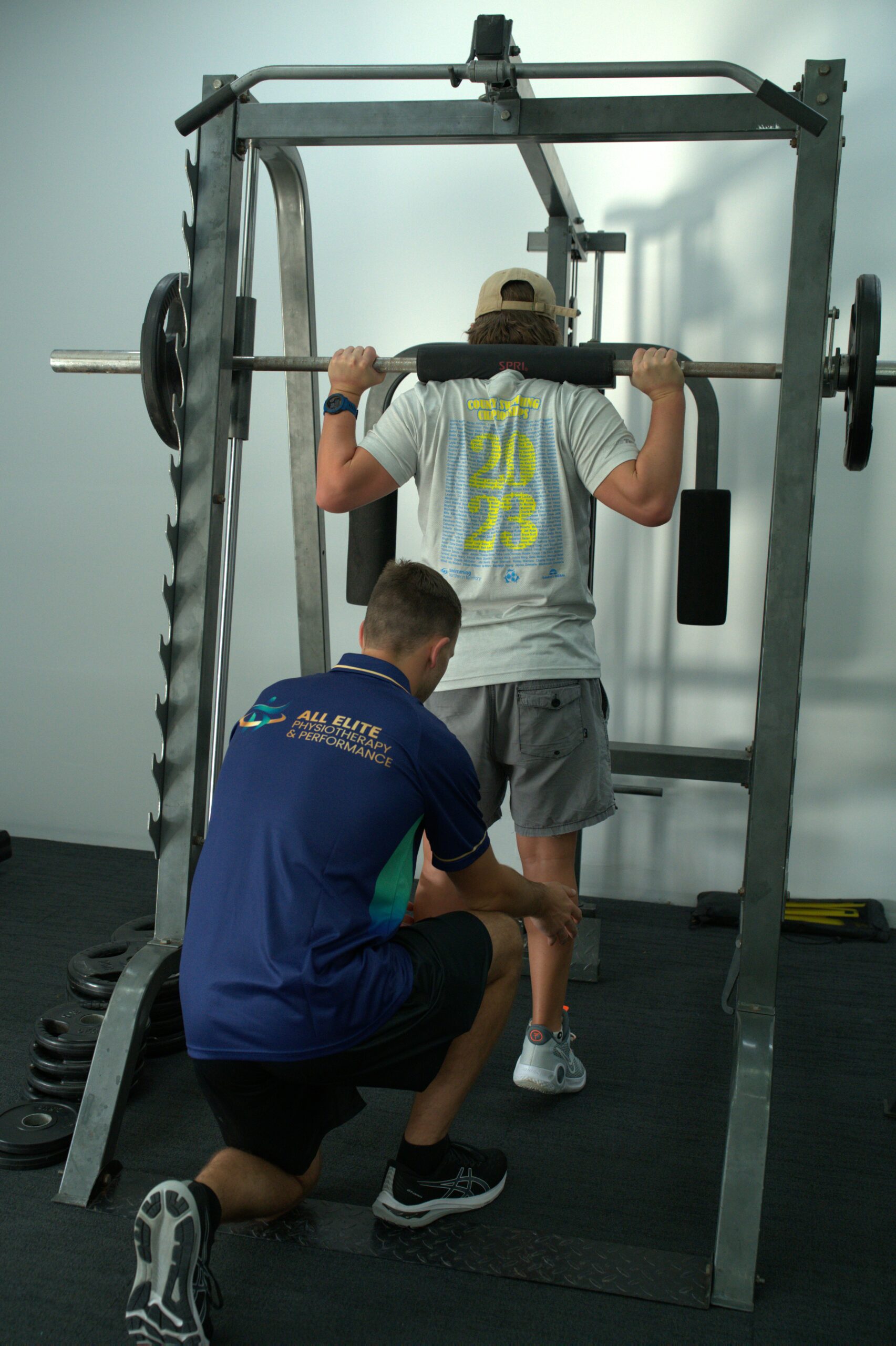
How Physiotherapy Treats and Manages Knee Pain Effectively
Physiotherapy is one of the most effective and non-invasive ways to treat knee pain. Rather than focusing only on relieving symptoms, it targets the underlying cause to help you recover fully and prevent future issues.
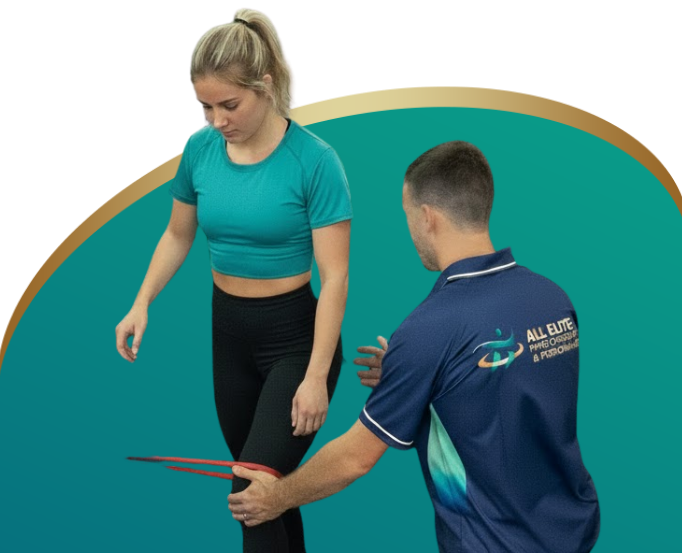
Our approach combines hands-on treatment, targeted exercises, and education to help you move better and strengthen the structures that support your knees.
During treatment, you can expect:
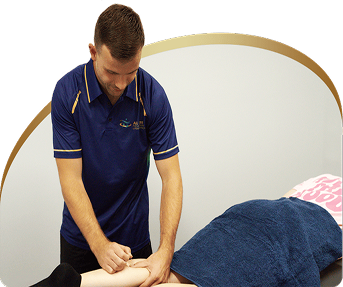
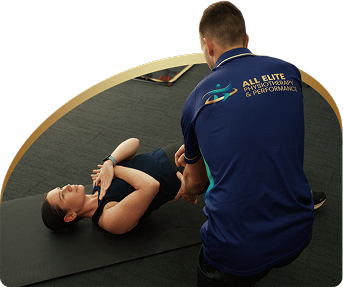
- Manual therapy to reduce stiffness, improve circulation, and ease pain
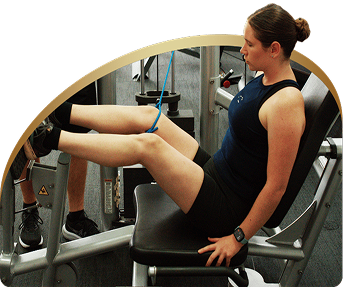
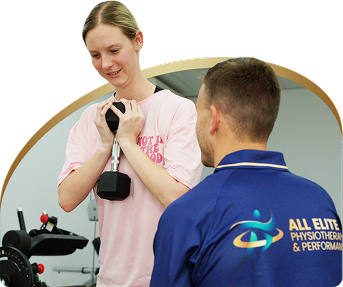
- Muscle strengthening for the quadriceps, hamstrings, hips, and calves to support proper joint function
- Balance and control exercises to improve coordination and stability
- Movement retraining to correct poor habits that place stress on the joint
- Recovery guidance to manage training loads and prevent re-injury
The goal is simple: relieve pain, restore normal movement, and rebuild strength so your knees can handle the demands of sport, work, or everyday activity.
Our Step-by-Step Process for
KNEE PAIN RECOVERY
At All Elite Physiotherapy & Performance, every knee pain treatment plan begins with understanding your unique condition. Our step-by-step approach ensures you progress safely and effectively.
Step 1: Comprehensive Assessment
We start with a detailed evaluation of your posture, walking, and movement patterns. This helps identify muscle weaknesses, tightness, or alignment issues contributing to knee pain.
Step 2: Pain Relief and Early Recovery
Once the source of pain is identified, we use manual therapy, dry needling, and gentle activation exercises to relieve discomfort and restore mobility.
Step 3: Strength and Stability Training
As pain decreases, we introduce strength and control exercises to stabilise the joint. This phase builds resilience through resistance training and dynamic movement work.
Step 4: Functional Rehabilitation
This stage reintroduces real-life and sport-specific movements such as squats, lunges, or agility drills. The goal is to help your knee perform confidently during high-demand activity.
Step 5: Ongoing Prevention and Maintenance
Once recovery is complete, we provide ongoing strategies to maintain strength, prevent flare-ups, and keep your knees performing at their best.
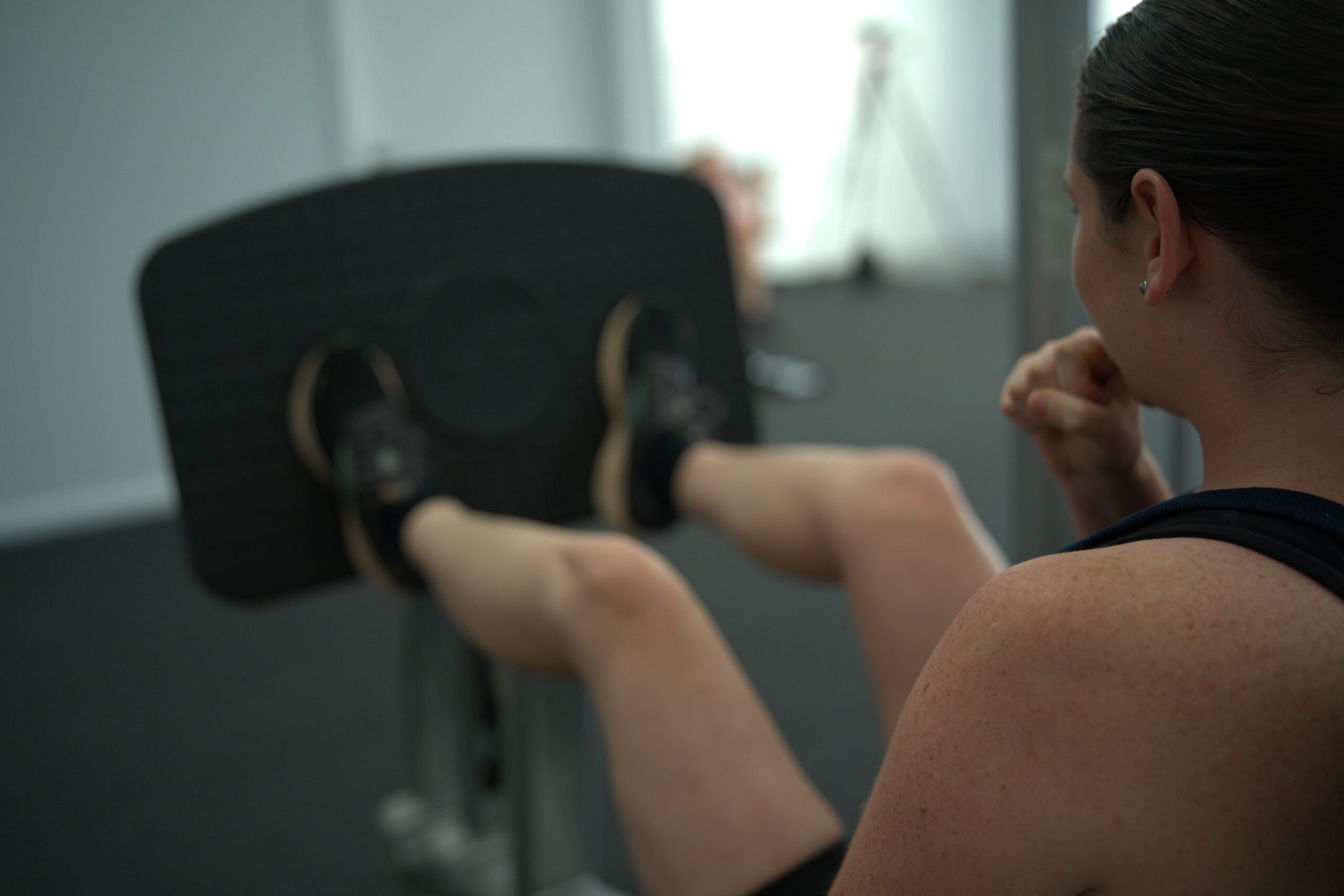
Preventing Future Knee Injuries Through Strength and Balance
Prevention is just as important as treatment. Even after recovery, maintaining strong, balanced muscles and good technique is key to avoiding re-injury. Our physiotherapists design prevention programs that focus on flexibility, control, and long-term conditioning.
Simple steps you can take include:
- Incorporating regular strength training for the lower body
- Maintaining healthy movement patterns when running, jumping, or lifting
- Including dynamic warm-ups and mobility drills before exercise
- Gradually increasing training intensity to avoid overuse
Our team will help you create a personalised program that fits your lifestyle and activity level, ensuring your knees stay healthy for the long term.
Why Choose All Elite Physio?
Choosing All Elite for your physiotherapy rehabilitation is the best decision you'll make to ignite your athletic potential.
We're just down the road from The Raymond Terrace Marketplace on Port Stephens Street.