GET BACK TO RUNNING AND SPORT WITHOUT CALF PAIN
At All Elite Physiotherapy & Performance, we help people across Raymond Terrace and Newcastle recover from calf strains and tears.
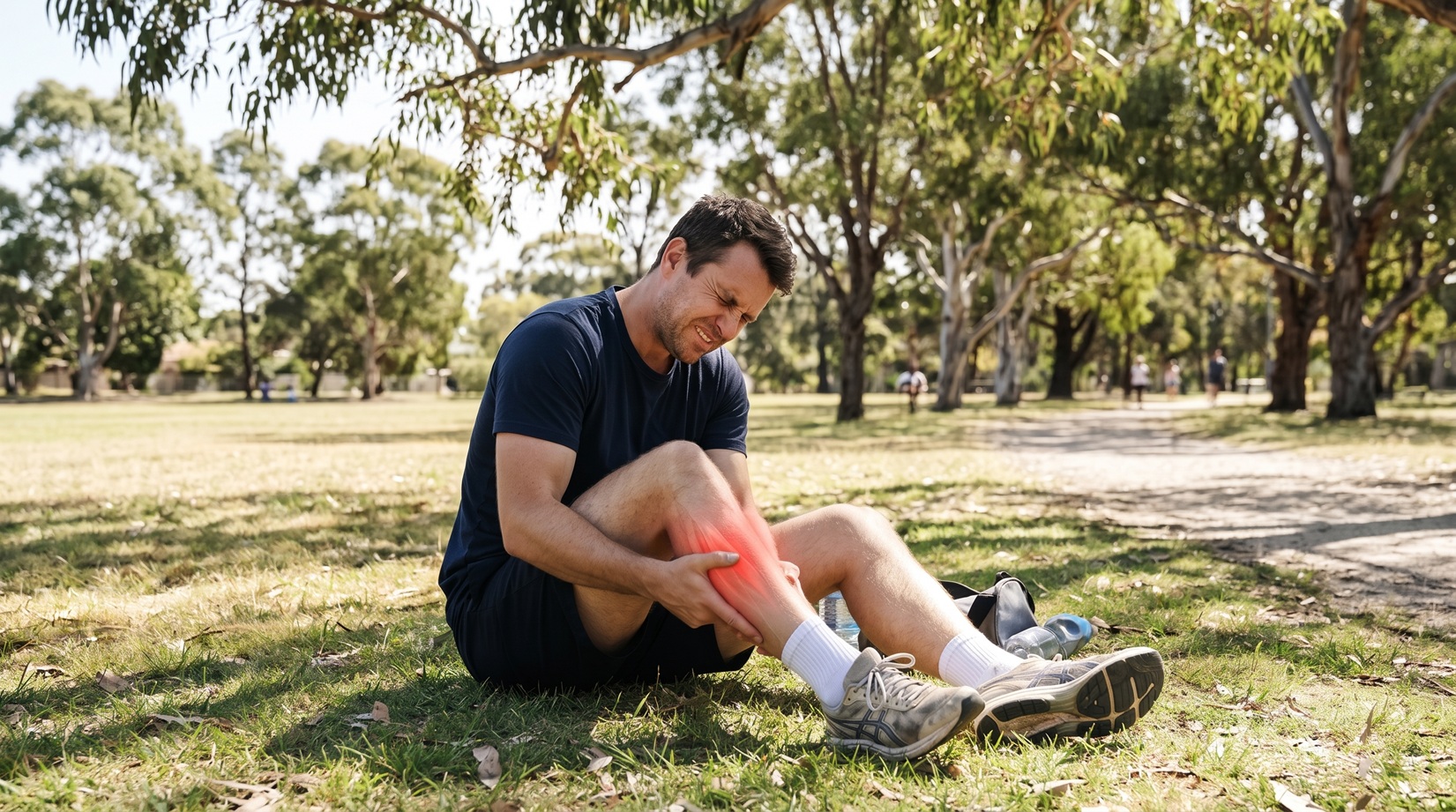
A calf strain happens when the muscle fibres are overstretched or torn. Strains are usually graded from mild to severe. A mild strain may feel like tightness or a small pull, while a more significant tear can cause sudden sharp pain, swelling, and bruising.
Calf strains are common in sports that involve sprinting, jumping, and quick changes of direction, but they can also happen from a sudden stretch or step in everyday life. Getting the injury assessed early helps you work out how serious it is and what recovery should look like.
Common Causes
Calf strains usually happen when the muscle is asked to produce or absorb more force than it is ready for. Our physiotherapists assess more than just the sore spot, looking at your calf strength, ankle movement, training load, and recovery.
Some of the most common causes include:
- Sudden acceleration or sprinting where the calf has to produce a lot of force quickly
- Rapid changes of direction common in netball, football, basketball, and tennis
- Fatigue late in a game or training session when the muscle tires and control drops
- Sudden increases in training load such as extra running, hills, or speed work
- Previous calf or Achilles injuries that left the area weaker or less conditioned
- Weak or tight calf muscles that cannot cope with the demands of sport
- Limited ankle mobility that changes how force travels through the lower leg
- Inadequate warm-up before explosive or high-intensity activity
Each of these affects the calf differently, so treatment needs to be personalised to the person and their activity.
Symptoms and Warning Signs
The signs of a calf strain depend on how much of the muscle is affected. Common symptoms include:
- A sudden sharp pain or a feeling of being “hit” or “kicked” in the back of the leg
- Tightness or tenderness in the calf muscle
- Pain when walking, rising onto your toes, or pushing off
- Swelling or bruising in the calf or around the ankle
- Weakness or difficulty putting weight through the leg
- Pain when stretching the calf or pulling the toes upward
If these symptoms last more than a few days or stop you from walking or training normally, it is worth getting assessed.
Seek urgent medical care if you have calf pain with swelling, warmth, or redness and no clear injury, if you have trouble breathing or chest pain, or if you cannot put any weight on the leg. These can be signs of conditions other than a muscle strain, such as a blood clot.
When to See a Physiotherapist for a Calf Strain
Many people try to rest or stretch a calf strain, then return to sport too early and strain it again. A physiotherapist can confirm the injury and make sure your recovery plan is safe.
You should see a physiotherapist if:
- Pain or tightness hasn’t improved after several days
- You have swelling, bruising, or difficulty walking normally
- You felt a sudden “pop” or sharp pain during activity
- You are unsure if it is a strain or an Achilles problem
- You’ve had repeated calf strains in the same leg
- You want to return to sport but don’t know if you’re ready
At All Elite Physiotherapy & Performance, our team identifies the extent of your injury and builds a plan around your sport, work, and goals.
How Physiotherapy Treats and Manages Calf Strains
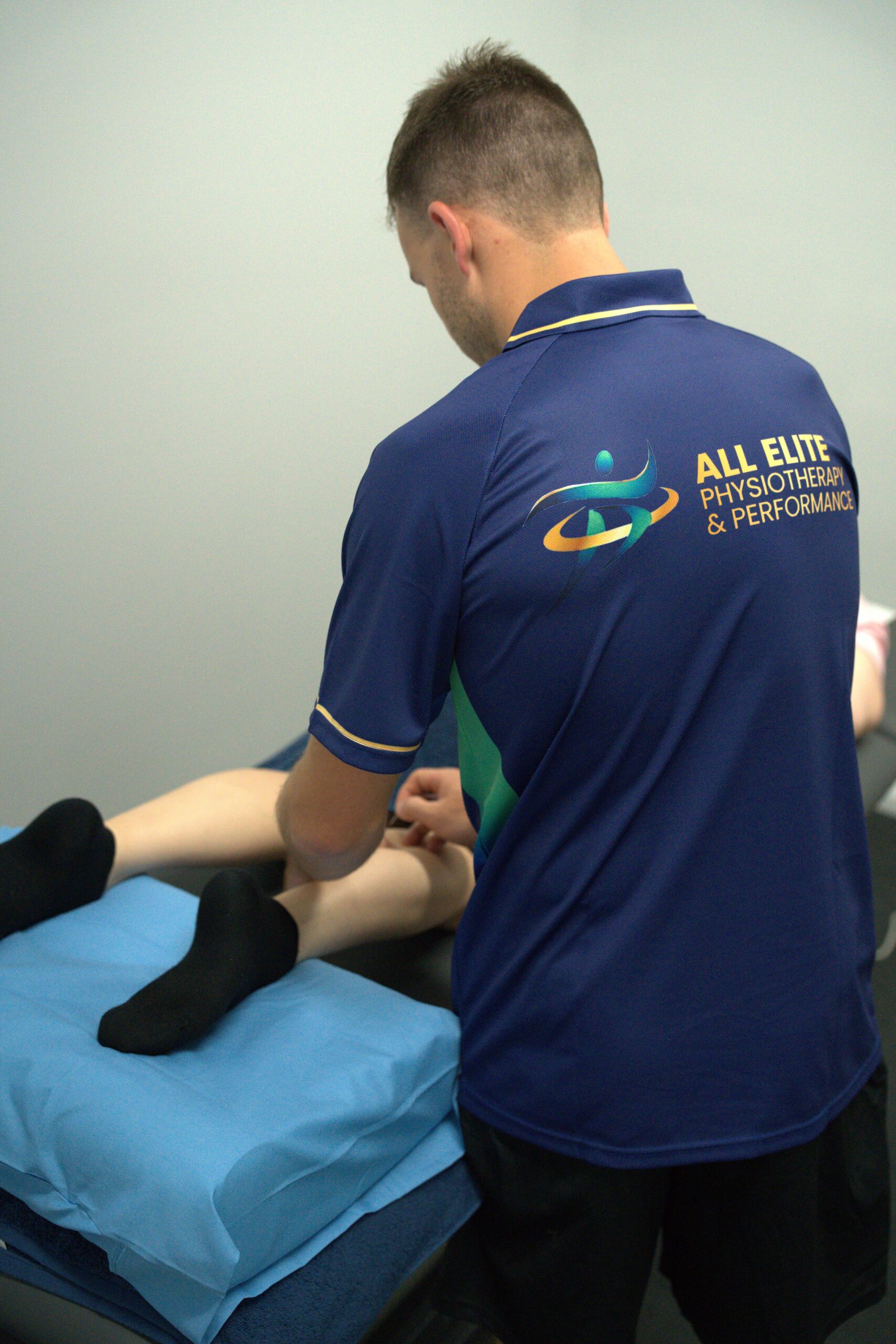
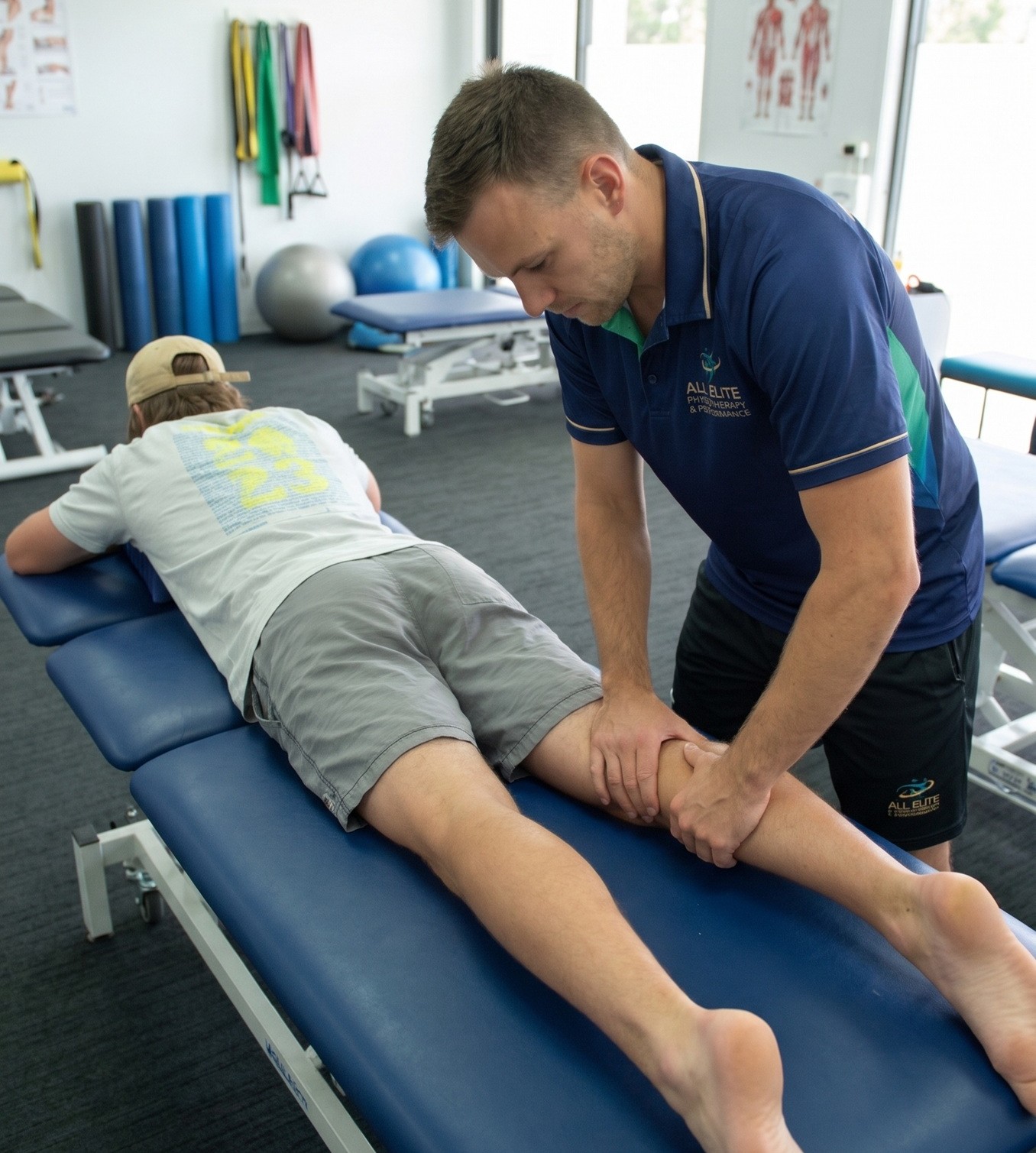
Treating a calf strain properly means more than waiting for the pain to settle. Physiotherapy focuses on protecting the muscle early, then gradually rebuilding its strength and capacity so it can handle sport again.
During treatment, you can expect:
- Accurate assessment to work out the severity of the strain and rule out other causes
- Early pain and swelling management to help you move comfortably
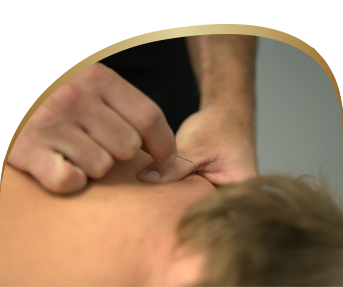
- Manual therapy and dry needling to ease muscle tightness and reduce discomfort
- Progressive calf strengthening that is stepped up as your muscle recovers
- Mobility work for the ankle and calf to restore a full, pain-free range
- Graded return to running and jumping to prepare the muscle for sport demands
- Load management advice so you stay active without risking a setback
The goal is simple: reduce pain, restore calf strength and flexibility, and help you return to sport with a lower risk of re-injury.
Our Step-by-Step Process for
CALF STRAIN RECOVERY
At All Elite Physiotherapy & Performance, every calf strain recovery plan starts with understanding exactly what has been injured and why. Our structured approach helps you progress safely.
Step 1: Comprehensive Assessment
We assess the calf, ankle, and lower leg to confirm the injury, check its severity, and look at the factors that may have contributed, such as strength, mobility, and training load.
Step 2: Pain Relief and Early Recovery
We settle pain and swelling and protect the muscle, using manual therapy, dry needling where appropriate, and gentle early movement to keep you as active as possible.
Step 3: Strength and Postural Control
As pain eases, we introduce progressive calf strengthening and mobility work. This phase rebuilds the muscle’s ability to handle load and move freely.
Step 4: Functional Rehabilitation
We reintroduce walking, jogging, hopping, sprinting, and change of direction in graded steps, with testing along the way to check your calf is ready for the demands of your sport.
Step 5: Ongoing Prevention and Maintenance
Once you’re back to full activity, we give you a plan to maintain calf strength, manage training load, and reduce the chance of the strain coming back.
Preventing Future Calf Strains Through Strength and Smart Training
Calf strains often come back when recovery is rushed or the muscle isn’t conditioned for the demands of sport. Our physiotherapists design prevention programs that focus on calf strength, load management, and long-term conditioning.
Simple steps you can take include:
- Doing regular calf strengthening, not just stretching
- Warming up properly before sprinting, jumping, or fast changes of direction
- Increasing running distance and speed gradually
- Not pushing through calf tightness when fatigued
- Allowing recovery time between hard sessions
- Seeing a physio early if you feel a niggle or tightness building
We’ll help you build a personalised plan that suits your sport, lifestyle, and goals.
Why Choose All Elite Physio?
Choosing us for your calf strain treatment is the best decision you'll make to ignite your athletic potential.
We're just behind Service NSW, across the road from Raymond Terrace Bowling Club.